Table of Contents
ToggleA cabin deck isn’t just an add-on, it’s the threshold between four walls and the woods. It’s where coffee tastes better, where the breeze actually reaches you, and where the whole point of owning a cabin makes sense. But building or upgrading a cabin deck means more than slapping down pressure-treated lumber and calling it done. The materials, railings, lighting, and finishes all need to hold up to weather extremes while matching the rustic character of the setting. Whether perched on a mountainside or tucked into pine trees, a well-planned deck extends the cabin’s footprint and becomes the most-used square footage on the property.
Key Takeaways
- Cedar and redwood are the best wood choices for cabin decks due to their natural rot resistance and ability to age gracefully, though pressure-treated pine offers a budget-friendly alternative.
- Cabin deck ideas should prioritize structural integrity by adhering to local building codes, accounting for frost heave, and using proper flashing and fasteners to prevent rot and decay in harsh mountain or woodland conditions.
- Railing designs like log railings, steel pipe frames, and mortise-and-tenon joinery enhance the rustic aesthetic while meeting code requirements of 36-inch minimum height with 4-inch baluster spacing.
- Warm-toned deck lighting (2700K–3000K) such as post cap lights, recessed deck lights, and string lights extends usability after sunset while preserving the cozy cabin ambiance.
- Adirondack chairs, log tables, porch swings, and natural fiber rugs create authentic cabin outdoor furniture that tolerates weather exposure and enhances the rustic experience.
- Regular maintenance—including reapplying stain or sealer every 2–3 years, clearing debris, inspecting structural components, and promptly replacing damaged boards—keeps your cabin deck functional and beautiful for decades.
Why Your Cabin Deck Deserves Special Attention
Cabins sit in harsher environments than suburban homes. Sun exposure at altitude is more intense, temperature swings are wider, and moisture, whether from snow, rain, or humidity, lingers longer under tree canopies. A deck that works fine in a flat, sunny backyard will warp, rot, or splinter faster in mountain or woodland conditions.
Structural integrity matters more when the deck is cantilevered over a slope or anchored into rocky terrain. Frost heave can shift footings, and uneven ground complicates joist layout. Always check local building codes for frost line depth, post embedment, and ledger board attachment to the cabin structure. Many jurisdictions require permits for decks over 30 inches above grade or attached to the building.
Aesthetics matter too, but they shouldn’t override function. A cabin deck should look like it belongs, natural materials, muted finishes, and details that echo the surroundings. Skip the composite boards in bright gray or the cable railing better suited to a coastal condo. This is the place for wood grain, hand-forged metal, and finishes that weather gracefully.
Rustic Wood Decking Options That Blend with Nature
Cedar is the go-to for cabin decks. Western red cedar resists rot and insects naturally, weathers to a silver-gray patina, and stays cooler underfoot than pressure-treated pine. Expect to pay $4–$7 per linear foot for 5/4 x 6 decking boards, depending on grade. Clear or A-grade cedar has fewer knots and a tighter grain, while B-grade and rustic grades show more character, often a better fit for a cabin aesthetic.
Redwood offers similar rot resistance with a deeper, richer tone. It’s regionally available on the West Coast but pricier elsewhere. Like cedar, it ages to gray unless treated with a penetrating oil or semi-transparent stain every two to three years.
Pressure-treated Southern yellow pine is the budget option at $1.50–$3 per linear foot. It’s structurally sound and widely available, but it needs time to dry before staining, typically 6–12 months, and it will crack and check as it ages. For a rustic cabin, that weathered look isn’t necessarily a drawback. Just avoid the greenish chemical tint by choosing kiln-dried after treatment (KDAT) lumber when possible.
Reclaimed or rough-sawn lumber adds instant character. Old barn siding, decommissioned bridge timbers, or milled logs from the property itself can become decking or accent boards. Verify that reclaimed wood is structurally sound and free of metal fasteners that could damage saw blades. Rough-sawn boards straight from a local sawmill need to acclimate for several weeks and may require planing or sanding to prevent splinters. Many builders following detailed woodworking plans incorporate reclaimed materials for authenticity.
Deck boards should be installed with a 1/8-inch gap for drainage and seasonal expansion. Use stainless steel or coated screws rated for exterior use to prevent rust streaks. Hidden fastener systems work with grooved deck boards for a cleaner look, but face-screwing is faster and easier to repair.
Creative Railing Designs for Mountain and Woodland Settings
Deck railings define the visual tone. Code typically requires 36-inch minimum height for residential decks, with balusters spaced no more than 4 inches apart to prevent a child’s head from passing through. Check local amendments, some mountain jurisdictions require 42 inches.
Log or branch railings suit cabins surrounded by woods. Peeled cedar or pine logs, roughly 3–4 inches in diameter, can be used as top and bottom rails with vertical saplings or branches as balusters. Use stainless steel screws or lag bolts, and pre-drill to prevent splitting. This style works best if you have access to fresh logs that can be debarked, dried, and treated with a wood preservative.
Steel pipe or rod railings offer a modern-rustic hybrid. Black iron pipe (schedule 40) or galvanized steel tubing with a powder-coated finish provides a sturdy, low-maintenance frame. Pair it with horizontal cable or vertical steel rods. Horizontal cables (1/8-inch or 3/16-inch stainless steel) spaced 3 inches apart stay within code and preserve sightlines.
Mortise-and-tenon wood railings deliver old-world craftsmanship. Square-cut posts with through-tenon top rails and routed mortises for balusters create a furniture-grade look. This approach demands precision and a good mortising jig or drill press, but the result is a railing system that feels hand-built. Builders tackling custom furniture projects often bring those joinery skills to railing work.
Glass panel inserts maximize views but can feel out of place unless the cabin leans contemporary. Tempered safety glass in aluminum or wood frames is low-maintenance and wind-resistant. Expect higher material costs and professional installation for structural glazing.
Finish railings with the same stain or sealant used on the deck surface to unify the look and protect the wood from UV degradation and moisture.
Cozy Lighting Solutions for Ambient Cabin Deck Evenings
Deck lighting extends usability after sunset and adds safety on stairs and transitions. Cabin settings benefit from warm color temperatures (2700K–3000K) that mimic firelight rather than the stark white of commercial LED fixtures.
Post cap lights mount on top of railing posts. Solar-powered versions are easiest to install, no wiring, no electrical permit, but battery life shortens in shaded or snowy areas. Low-voltage (12V) LED post caps wired to a transformer offer consistent brightness and can be controlled with timers or dimmers. Run 12/2 landscape wire under the deck and staple it to joists.
Recessed deck lights installed flush in deck boards or stair risers create pools of light without glare. Use IP65-rated fixtures to prevent moisture ingress. Space them 4–6 feet apart along pathways and at the top and bottom of stairs. These require cutting holes in deck boards, so plan placement before installation.
String lights or Edison bulbs on overhead beams or railings deliver a casual, café vibe. Use weatherproof commercial-grade strands rated for outdoor use, not indoor party lights. Mount them on eye hooks screwed into fascia boards or overhead beams. Avoid overloading circuits, most 15-amp circuits handle about 1,800 watts.
Lanterns and sconces mounted on cabin walls adjacent to the deck add both function and style. Powder-coated steel or wrought iron fixtures with seeded or amber glass fit the rustic theme. Wall sconces should be installed on exterior-rated junction boxes and wired by a licensed electrician if you’re unfamiliar with the National Electrical Code (NEC) requirements for wet locations.
Dimmer switches and timers help manage energy use and mood. A transformer with a photocell can automate low-voltage lighting at dusk.
Outdoor Furniture and Decor That Enhance the Cabin Vibe
Cabin deck furniture should tolerate weather exposure and look like it was made by hand or rescued from a barn sale. Avoid resin wicker and aluminum bistro sets.
Adirondack chairs are the archetypal cabin seating. Build them from cedar or redwood using free plans, plenty of workshop tutorials walk through the cuts and assembly. Factory-made versions in poly lumber (recycled HDPE) last longer but sacrifice authenticity.
Log benches and tables can be milled from site timber or purchased from rustic furniture makers. A simple slab table with live edges on a steel base or log trestle fits the setting. Seal raw wood surfaces with marine-grade spar urethane or a penetrating oil to resist moisture and prevent cracking.
Porch swings or hanging daybeds work well on covered portions of the deck. Mount them to overhead beams using lag bolts into solid wood (not into fascia or trim). Each mount point should support at least 500 pounds. Use galvanized or stainless steel eye bolts and chain rated for the load.
Outdoor rugs in natural fibers (jute, sisal) or polypropylene add warmth underfoot and define seating zones. Choose a size that fits entirely under furniture legs to prevent tripping. Shake them out regularly to prevent mildew in damp climates.
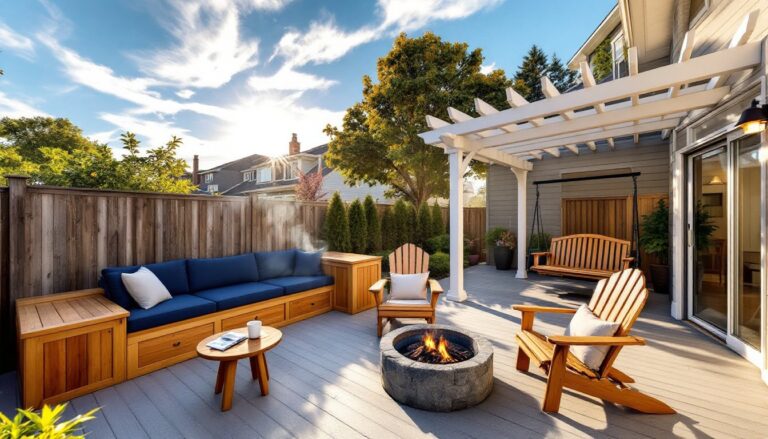
Fire pits or chimineas extend shoulder-season use. Portable propane or wood-burning fire pits should sit on a non-combustible pad and be positioned at least 10 feet from railings and overhead structures. Check local fire restrictions, especially during dry summer months.
Decor, antler mounts, vintage lanterns, galvanized buckets as planters, should be weatherproof or easy to bring indoors. Resist the urge to clutter. A few well-chosen pieces make more impact than a dozen tchotchkes.
Weatherproofing and Maintenance Tips for Longevity
Wood decks need regular care to survive alpine winters and humid summers. Neglect leads to rot, splinters, and costly repairs.
Stain or seal within six months of installation. Bare wood exposed to UV and moisture degrades quickly. Use a semi-transparent penetrating stain for cedar or redwood, it allows the grain to show and won’t peel like solid-color stains or paint. Pressure-treated lumber benefits from a water-repellent sealer after it dries.
Reapply stain or sealer every 2–3 years, or when water stops beading on the surface. Clean the deck first with a deck cleaner (oxalic acid or sodium percarbonate-based) and a stiff brush or pressure washer set to 1200–1500 psi. Higher pressure can gouge softwoods.
Inspect joists, ledger boards, and flashing annually. Look for signs of rot, particularly where the ledger attaches to the cabin and around post bases. Flashing above the ledger prevents water from wicking into the cabin’s rim joist. If the deck wasn’t built with galvanized or stainless steel joist hangers and bolts, corrosion is a long-term risk.
Clear debris from between deck boards using a putty knife or specialized deck-cleaning tool. Leaves, pine needles, and dirt trap moisture and accelerate rot. Trim back vegetation touching the deck to improve airflow.
Replace damaged boards promptly. A single split or cupped board can become a tripping hazard and allow water into the substructure. Keep spare boards on hand that match the original species and dimensions.
Winter prep includes removing snow buildup (use a plastic shovel, not metal) and checking that drainage isn’t blocked by ice dams. In areas with heavy snowfall, consider a steeper deck pitch or covered sections to reduce load.
Wear safety glasses, gloves, and a dust mask when sanding, staining, or pressure washing. Chemical strippers and deck cleaners can irritate skin and eyes.
Conclusion
A cabin deck done right becomes the most valuable real estate on the property, not because of resale numbers, but because it’s where the cabin experience actually happens. Choose materials that age well, design railings and lighting that suit the setting, and commit to the maintenance. The deck will outlast trends and deliver decades of use if built with care and respect for the environment it sits in.