Table of Contents
ToggleA well-designed deck lives or dies by its seating. Whether someone’s working with a sprawling multi-level platform or a compact 10×12 backyard setup, the right seating arrangement determines how the space actually gets used, not just admired from the kitchen window. Smart seating turns a basic deck into a functional outdoor room where families gather, guests linger, and weekends feel a little less rushed. From built-in benches that maximize square footage to swinging chairs that add character, the options blend carpentry, comfort, and creative problem-solving. Here’s how to approach deck seating with an eye toward durability, flexibility, and real-world use.
Key Takeaways
- Strategic deck seating ideas transform a basic outdoor platform into a functional gathering space where families linger and enjoy weekends together.
- Built-in benches maximize limited deck space with efficient 16–18 inch seat heights and require 1/8-inch ventilation gaps between boards to prevent moisture-related rot.
- L-shaped and corner seating arrangements create intimate conversation zones without obstructing traffic, but demand precision carpentry and custom-cut cushions for proper fit.
- Freestanding furniture offers flexibility for renters and homeowners who prefer seasonal rearrangement, though materials like teak, aluminum, and resin wicker each require different maintenance approaches.
- Storage-integrated seating benches solve dual problems of seating and organization by incorporating hinged lids and drainage ventilation to protect stored items from moisture.
- Fire pit seating should be positioned 3–4 feet from the ring with non-combustible surfaces and a protective pad beneath the deck, while hanging swings require verification that deck joists can safely support 500+ pound dynamic loads.
Built-In Bench Seating for Maximum Comfort and Space Efficiency
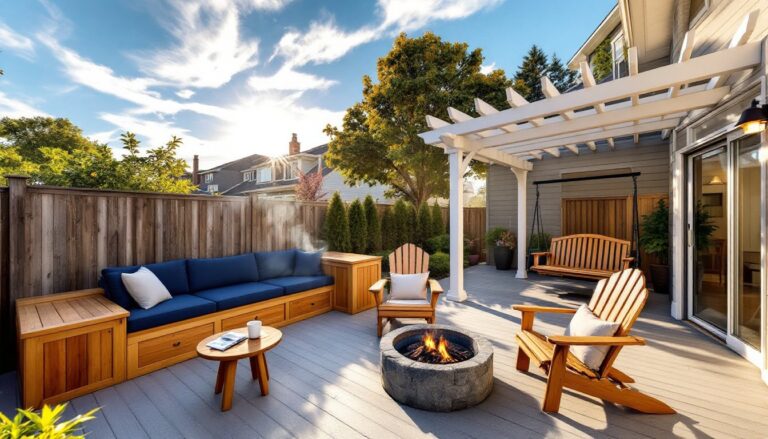
Built-in benches anchor a deck’s perimeter and make efficient use of space that would otherwise go unused. They’re especially valuable on smaller decks where freestanding furniture eats up walking room.
Most built-ins are framed with 2×4 or 2×6 pressure-treated lumber for the structure, topped with 5/4 decking boards or 2×4s on edge for the seat surface. Standard seat height is 16 to 18 inches, with a depth of 15 to 18 inches, any deeper and shorter users end up perched awkwardly.
For continuous bench runs along a railing, the bench back can double as the lower rail, but check local codes. The International Residential Code (IRC) requires guardrails on decks over 30 inches above grade, with balusters spaced no more than 4 inches apart. If the bench back serves as part of the railing system, it needs to meet those spacing and load requirements.
Cushions are almost mandatory for comfort. Marine-grade foam wrapped in outdoor fabric (solution-dyed acrylic like Sunbrella) holds up to UV and moisture better than standard upholstery. Store cushions in a deck box during rain or winter to extend their lifespan.
One often-overlooked detail: ventilation gaps. Leave 1/8-inch spaces between seat boards to let water drain and air circulate. Trapped moisture accelerates rot, even in treated lumber. Many designs for built-in sofas incorporate slatted backs and seats for this reason.
Corner and L-Shaped Seating Arrangements
L-shaped and corner configurations excel at creating intimate conversation zones without blocking sightlines or traffic flow. They’re ideal for decks that wrap around a house corner or for carving out a defined seating area on a larger platform.
When building an L-shaped bench, the corner piece is the trickiest part. Miter the seat boards at 45 degrees where they meet, or use a corner block with boards butting into it at right angles. The mitered joint looks cleaner but requires precision cuts, a miter saw or track saw beats a circular saw here for accuracy.
For structural support, run a 2×6 or 2×8 rim joist along the perimeter, with 2×4 blocking every 16 inches on center beneath the seat boards. Corner posts need to be plumb and solidly anchored: use galvanized or stainless steel structural screws rather than nails for connections that won’t loosen over seasonal wood movement.
L-shaped seating pairs well with a low table or ottoman in the corner gap. Keep the table height around 16 to 18 inches to match the seat height, so it can double as a footrest or extra perch during gatherings.
Cushion strategy matters: L-shaped benches often need custom-cut foam to fit snugly around the corner. Off-the-shelf cushions rarely fit right. Consider ordering foam cut to size, then sew or hire a local upholsterer to wrap it in outdoor fabric.
Freestanding Furniture Options for Flexible Layouts
Freestanding furniture is the simplest route for renters, anyone skipping carpentry, or homeowners who like to rearrange layouts seasonally. The trade-off: chairs and sofas take up more floor space than built-ins and can shift or blow around in wind.
Material choices dictate longevity and maintenance:
- Teak and eucalyptus: Naturally rot-resistant, weather to a silver-gray patina unless treated annually with teak oil. Expensive upfront but can last 20+ years.
- Powder-coated aluminum: Lightweight, rust-proof, and low-maintenance. Look for welded frames, not hollow tube construction held with screws.
- All-weather wicker (resin): UV-resistant and comfortable, but inspect the frame material, steel frames rust out faster than aluminum.
- Polywood (recycled HDPE plastic lumber): Mimics painted wood, won’t rot or splinter, and requires only soap-and-water cleaning. Heavier than it looks, which helps with wind.
For sectionals, modular pieces beat one-piece sofas for flexibility. They can be reconfigured for different group sizes and moved indoors during storms.
Anchoring prevents furniture from becoming projectiles in high wind. Use deck anchors or tie-downs for lightweight pieces, or add sandbag weights inside hollow bases.
One practical tip: measure doorways and stair widths before buying. An oversized sectional that can’t fit through the patio door is a headache every fall.
Storage-Integrated Seating Solutions
Deck storage is chronically scarce, and seating with built-in storage solves two problems at once. Bench boxes can stash cushions, garden tools, pool toys, or firewood, keeping the deck surface clear and organized.
Building a storage bench is a step up in complexity from a basic bench. The seat needs to hinge open (use exterior-grade piano hinges or heavy-duty strap hinges), and the box itself should be watertight or at least weather-resistant.
For a simple DIY version:
- Frame a box from 2×4 or 2×6 lumber, with a bottom, two ends, and a back.
- Sheath the exterior with 1×6 or 5/4 decking boards, leaving small gaps for drainage.
- Line the interior with sheet metal or EPDM rubber if storing items that can’t get wet.
- Attach the hinged lid (made from 2×4 frame with decking boards screwed on top). Add soft-close lid supports to prevent finger-smashing.
Ventilation is critical. Even a “sealed” box traps humidity. Drill 1/2-inch holes near the bottom corners to let moisture escape.
Prefab deck boxes (Keter, Suncast, Lifetime) are solid alternatives if carpentry isn’t in the budget. Look for 100+ gallon capacity and lockable lids if the deck is accessible to wandering neighborhood kids.
Many storage-focused seating styles draw inspiration from outdoor living trends that emphasize multi-functional furniture for smaller yards.
Cozy Fire Pit and Conversation Area Seating
Fire pit seating is all about proximity and symmetry. Arrange seating in a circle or horseshoe with seats 3 to 4 feet from the fire ring edge, close enough for warmth, far enough to avoid sparks and radiant heat damage to cushions.
Adirondack chairs are fire pit classics for good reason: the reclined angle is comfortable for long sits, and the wide armrests hold drinks. Build them from cedar or redwood for natural rot resistance, or use pressure-treated lumber and paint.
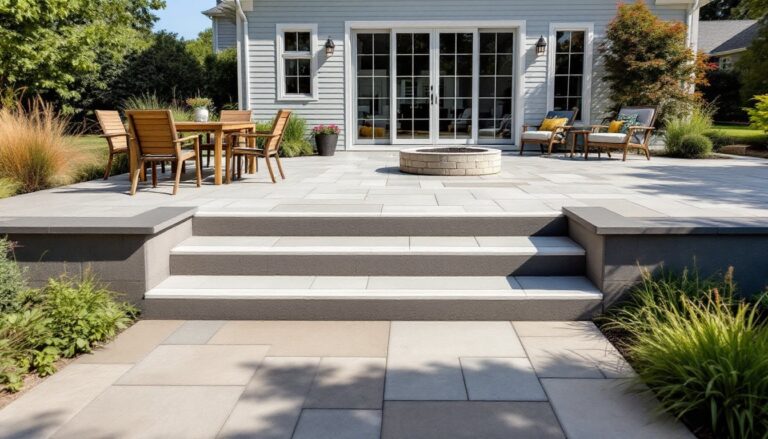
For built-in fire pit seating, consider a raised stone or block wall that doubles as a bench. Cap it with 2-inch thick bluestone, granite, or concrete pavers for a cool, non-combustible seat surface. No cushions needed, but keep a stack of outdoor throw pillows nearby.
Safety and code compliance matter here. Many jurisdictions require fire pits to be at least 10 to 25 feet from structures, and some ban wood-burning pits altogether in favor of propane or natural gas. Check local fire codes before digging or pouring a base.
If the deck itself is composite or wood, a fire pit pad (non-combustible material like pavers or a metal heat shield) protects the decking. Never place a fire pit directly on combustible decking without a barrier.
Seating height around a fire pit can go lower than standard, 12 to 14 inches, which creates a relaxed, campfire vibe. Pair low seats with a higher side table for drinks and snacks.
Hanging and Swing Seating for Relaxation
Porch swings and hanging chairs add movement and charm, but they also add structural loads that deck framing wasn’t necessarily designed to carry. Before hanging anything, verify that the overhead structure can handle the weight.
A standard two-person porch swing plus occupants can generate dynamic loads exceeding 500 pounds when swinging. That load concentrates on two points, the mounting hardware.
Safe installation steps:
- Locate ceiling joists (typically 2×6, 2×8, or 2×10 on 16-inch centers) using a stud finder or by tapping.
- Use eye bolts or swing hangers rated for 500+ pounds per anchor point. Screw them into the joist, not just the decking material.
- If joists run parallel to the swing direction, install a 2×8 or 2×10 crossbeam perpendicular between two joists, fastened with joist hangers.
- For exposed beam ceilings, drill through the beam and use through-bolts with washers and nuts on top for maximum holding power.
Hanging chairs (egg chairs, hammock chairs) usually concentrate load on a single point. Use a ceiling joist or beam and a swivel hook rated for at least 300 pounds. Spring for stainless steel hardware near the coast to resist corrosion.
If the deck has no overhead structure, a freestanding swing frame (A-frame or arch style) is the safest bet. They’re available in powder-coated steel or wood and require no structural modification.
Clearance is often overlooked. Leave at least 30 inches behind and in front of the swing path to avoid collisions with railings or posts. Many home improvement guides recommend testing swing arcs before final installation.
Conclusion
Deck seating isn’t one-size-fits-all. The right approach depends on deck size, how the space gets used, and whether someone wants to pick up a saw or a credit card. Built-ins maximize space and create a finished look. Freestanding pieces offer flexibility. Storage benches solve clutter. Fire pit seating extends the season. And swings add a little nostalgia. Whatever the mix, prioritize solid structure, weather-resistant materials, and layouts that encourage people to actually sit down and stay awhile.